Industry View
UK Digital PR Agencies Ranked by Capability
Explore seven UK digital PR agencies with honest assessments of their strengths. Learn how to choose the right agency for link acquisition, buyer coverage or.
Tom Lawrence
April 2026 · 9 min read
Updated on 29th September 2026
Digital PR Agencies in the UK (2026): How to Choose the Right One
Written by the team at MVPR. We’re a UK digital PR agency, so we have an obvious interest in how this guide reads. We’ve put ourselves in the list below, in alphabetical order with everyone else. We’ve also been honest about when another agency on this list is the better call. Judge the guide on whether it helps you decide, not on where our name sits.
For founders, marketing leaders and heads of communications choosing a digital PR agency: there’s no single best agency. There’s the agency that’s good at the specific job you need doing, for the specific audience you need to reach.
Most “best digital PR agencies” guides are written by digital PR agencies. Most of them put the author at number one. That tells you almost nothing about which agency is right for you.
So this guide works differently. There’s no ranking. We list 7 agencies we rate, in alphabetical order, with a plain description of what each one is strong at and who it suits. Then we cover how to work out which kind of agency you need, and the questions to ask before you sign anything.
What “digital PR” actually means in 2026
The definition has moved. Digital PR used to mean earning editorial backlinks to improve organic search rankings. Now it covers 3 overlapping jobs. It’s worth separating them, because agencies are rarely equally good at all 3:
- Link acquisition. Earning authoritative backlinks from editorial coverage to support SEO. It’s well understood, reasonably measurable, and has the most established playbooks.
- Buyer-facing coverage. Placements in the publications your actual buyers read, which shape their decisions while they research. It’s harder to measure. It also needs enough sector knowledge to tell a story a specialist journalist wants to run.
- AI search visibility. Influencing what comes up when someone asks ChatGPT, Copilot, Perplexity or Google AI Overviews for a recommendation. It’s the newest of the 3 and the least settled.
That third one needs a caveat, because there’s a lot of confident nonsense being written about it.
Large language models weight signals like domain authority, backlink profile and whether a source reads as balanced. That makes the current landscape gameable. If very little trusted content exists on a topic, a single mediocre blog post from a domain with decent authority can end up cited as an authority.
That won’t last. As more organisations publish on the same topics, the bar for “trustworthy” rises, and thin self-serving content stops clearing it. What survives is coverage other people wrote about you: third-party validation, industry association presence and, eventually, things like Wikipedia citations. Those are hard to get precisely because they’re hard to fake.
What this means for you: if an agency sells you AI search visibility as a standalone tactic, ask what happens to that visibility in 18 months. If the answer depends on being early rather than on being genuinely cited, it’s a short-term position.
7 UK digital PR agencies worth considering
Listed alphabetically, not ranked. Each entry says what the agency is strong at and who it suits. That’s a more useful basis for a shortlist than a position someone else assigned.
Bottle
Strongest at: creative campaigns for challenger consumer brands that need national coverage without national-brand budgets.
Bottle has a track record of campaign ideas that get picked up well beyond what the client’s size would normally command. If nobody has heard of you and you sell to consumers, this is the kind of agency that solves it.
Consider them if: you’re D2C, lifestyle, health or consumer subscription, and your main constraint is awareness rather than credibility.
JBH Digital PR
Strongest at: data-led creative campaigns designed to earn links from national and industry publications.
JBH work across B2C and B2B, with particular depth in e-commerce and consumer technology. If your PR objective really sits under an SEO objective, an agency built around link acquisition will do that job better than one built around narrative.
Consider them if: your main measure of success is domain authority and referring domains, and you have an SEO team the PR work needs to serve.
Offices: Manchester, London
Koozai
Strongest at: digital PR for SMEs, with reporting a non-specialist can actually read.
Koozai is a digital marketing agency with a dedicated digital PR practice. For first-time PR buyers, an accessible entry point and clear reporting matter more than specialist depth. It’s a sensible place to learn what PR does before you commit a larger budget.
Consider them if: you’re an SME or regional business buying PR for the first time and you want to understand what you’re paying for.
Offices: Brighton, remote-first
MVPR
Strongest at: B2B technology and AI companies that need PR connected to commercial outcomes, and that want to see the conversion data behind the activity.
We built our own AI infrastructure, a system of agents we call Ivy. It handles journalist research, drafting and opportunity evaluation. Our strategists review everything and own the relationships.
The point of the system isn’t that AI writes the pitches. It’s that we can measure coverage rate, the ratio of pitches sent to coverage secured, across every client and every pitch type. Then we use that to decide what to do next.
We also run earned-first outbound, which uses coverage as sales infrastructure rather than as brand awareness. The numbers behind it are ours, and they come with real caveats. We set those out in the method note at the end.
Consider us if: you’re a B2B SaaS, deep tech or AI company, you sell to a technical or commercial buyer who reads trade press, and you want to know your pitch-to-coverage conversion rate.
Consider someone else if: you’re a consumer brand, you need volume-led creative campaigns, or your objective is purely link acquisition for SEO. Several agencies on this list do those jobs better than we do.
Representative coverage: VentureBeat, MIT Technology Review, HackerNoon, IT Pro, The New Stack
Pricing model: deliverables-based rather than hourly retainer
Prohibition PR
Strongest at: blending earned media with social strategy, so coverage gets amplified rather than published and forgotten.
If you treat PR and social as separate functions with separate agencies, you’re probably losing most of the value of your coverage. Prohibition are built for organisations that want the two joined up.
Consider them if: you’re a consumer brand, hospitality or professional services business where social amplification carries as much weight as the placement itself.
Offices: Leeds
Rise at Seven
Strongest at: high-volume creative campaigns that combine digital PR, content and SEO.
One of the fastest-growing agencies in the UK, built around sustained campaign output rather than occasional set pieces. If your category needs a steady drumbeat of coverage to stay visible, volume is a legitimate strategy, and they do it well.
Consider them if: you’re a consumer, retail or challenger brand and you need consistent coverage volume across a long campaign period.
Offices: Sheffield, London
Tyto PR
Strongest at: pan-European B2B technology PR with genuine local media relationships in each market.
Tyto work without a fixed office, with a team spread across several countries. For companies expanding across Europe, this matters more than it sounds. A London agency with a translation workflow isn’t the same as someone who knows the German trade press.
Consider them if: you’re a Series A to C B2B tech company expanding into several European markets and you need more than English-language coverage.
How to work out which one you need
3 questions get you most of the way to a shortlist.
1. What job does the coverage have to do? If it has to build domain authority, prioritise link-focused agencies. If it has to shorten sales cycles and give your sales team something to open with, prioritise agencies that can show you conversion data. If it has to make people aware you exist, prioritise creative campaign agencies. These are different capabilities, and very few agencies are excellent at more than 2 of them.
2. How specific is your sector? The more specialist your category, the more an agency’s existing journalist relationships matter, and the less a generalist creative track record transfers. A brilliant consumer campaign agency will struggle to place a story about developer tooling. A specialist B2B tech agency will struggle to get you into the Daily Mail.
3. What will you accept as evidence that it’s working? This is the question most buyers answer too late. Decide before you sign whether you’re measuring coverage volume, referring domains, share of voice, pipeline influence or coverage rate. The answer decides which agencies can honestly serve you.
A note on AI, and when to ignore this
Most in-house comms teams aren’t ready to buy an AI-enabled PR service. We’d rather say that than sell into it.
We recently spent a day at a UK conference on AI in PR. There were roughly 600 senior comms people in the room. Most were heads of comms or corporate affairs at organisations of 1,000 people or more. By definition, these are the people furthest ahead in the market.
A speaker asked who had gone back to their team’s workflows and rethought them from the ground up.
One hand went up… in a room of roughly 600.
That’s not a criticism of anyone there. It’s where the market actually is. Most comms professionals are where most of us were shortly after ChatGPT launched: “this is an interesting tool, I wonder what we do with it.” A small group have gone away, taken courses, learned to work with code and built something real. They’re a genuine minority.
If you’re in the majority, buying a tool or an AI-enabled agency service is probably the wrong next step. The right next step is unglamorous:
- Work out which repetitive tasks your juniors find most frustrating.
- Understand where AI is genuinely better than a person, and where it’s clearly worse.
- Build a small number of reliable workflows before you buy anything.
Agencies that skip this and sell you the platform anyway are setting you up for a failed adoption and a bad year.
Be wary of any agency that presents AI as either total automation or a gimmick. Both positions are wrong in the same way. The useful question is narrow and practical: which steps in this process should a machine do, which need a human, and how do you check the output?
Questions to ask before you sign
- What’s your average pitch-to-coverage conversion rate, and what’s the denominator behind that number?
- Can you show me coverage in the specific publications my buyers read, rather than a list of impressive logos?
- Where in your workflow do you use AI, where do humans lead, and who checks the output before it reaches a journalist?
- How do you connect PR results to pipeline, and how much of that is measurement rather than inference?
- Who will actually work on my account day to day, and were they in the pitch?
- What would make you tell me this isn’t working, and how quickly would you say so?
That last one is the most revealing. An agency that can’t describe what failure looks like hasn’t thought about how it would know.
Key takeaways
- There’s no single best digital PR agency. Some are good at link acquisition, some at buyer-facing coverage in specialist categories, and some at creative volume. Work out which job you’re hiring for first.
- Coverage rate tells you more than coverage volume, but only if the agency tells you the denominator.
- AI search visibility is gameable today, and it won’t stay that way. Build for the version of the landscape where the trust bar is higher.
- Most comms teams should fix their workflows before they buy an AI-enabled service. If an agency won’t tell you that, ask why.
Method note
The conversion figures in the MVPR entry come from our own clients, not from an industry benchmark.
We based the agency descriptions in this guide on publicly available information, published work and our own observation of the UK market. We haven’t audited any competitor’s performance data. Ask each of them the questions above rather than taking our summary as enough.
Related posts
Industry View
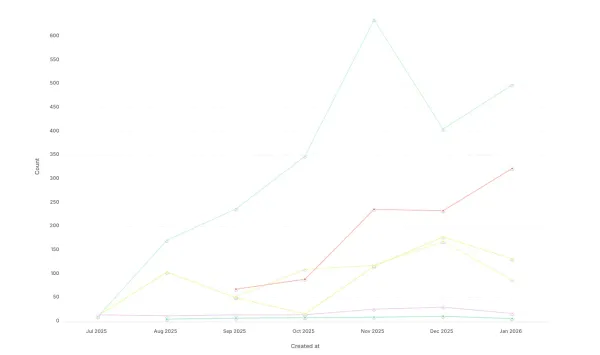
Earned-first Cold Outbound: How can PR help Sales teams build more trust
Cold outbound converts at 0.3%. Earned-first outbound converts at 12.1%. Here’s the data behind why leading with PR-earned trust transforms B2B sales results.
Industry View
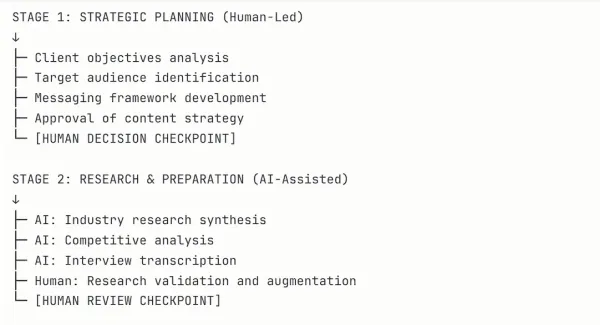
How AI PR Firms Design Human-in-the-Loop Processes
How leading AI and PR companies design human-in-the-loop processes to meet EU AI Act requirements — with practical examples from agency practice.
Industry View
What to know about LLM Search: AI cares more about your PR than your blog
AI search engines form opinions about your brand, not just rankings. Here's what LLM search means for PR - and why earned media matters more than ever.