Data & Research
What is a writing style fingerprint - and how can you use it for spokespeople?
A writing style fingerprint turns how a spokesperson writes into transformation rules an AI can follow - analyse 78 dimensions, download the JSON, and use it in Claude or a custom GPT.
Tom Lawrence
June 2026 · 4 min read
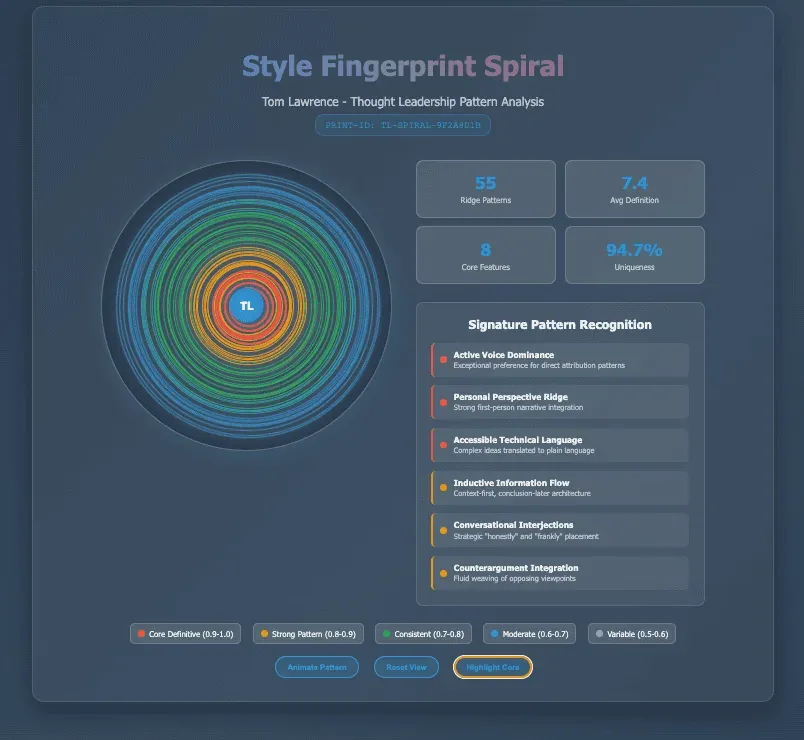
Updated - June 23rd 2026
A spokesperson’s voice is more than their tone. It is the way they open an argument, the evidence they reach for, how formal they are, and whether they lead with the point or build to it. A writing style fingerprint captures that voice as something an AI can actually follow: not a vague brief like “professional but warm”, but a structured set of rules drawn from how the person genuinely writes.
It is the difference between telling an AI assistant “write like our CEO” and handing it a precise, evidence-backed instruction set built from the CEO’s own words.
What it measures
The fingerprint analyses a writing sample across 78 linguistic dimensions, grouped into seven families:
- Structural Flow - how information is ordered and paragraphs are built
- Causality and Logic - how claims are connected and arguments constructed
- Tone and Voice - register, warmth, formality, and distance
- Vocabulary and Language - word choice, technicality, plain versus ornate
- Grammar and Syntax - sentence shape, active versus passive, rhythm
- Rhetoric and Evidence - how points are substantiated and persuasion is built
- Presentation and Format - lists, emphasis, and formatting habits
For every dimension you get three things: the approach (a plain-English description of what the writer does), an example (a verbatim quote from their text), and a transformation rule (an instruction telling another writer, or an AI, how to reproduce it).
How to use your fingerprint
The fingerprint is not the end product. It is a reusable instruction set, and putting it to work takes four steps:
- Paste 300 or more words of the spokesperson’s genuine writing into the tool.
- The analysis runs in about one to two minutes.
- Download the JSON file of results.
- Upload that JSON into a Claude Project or a custom GPT, and instruct the assistant to use the file’s transformation rules as its guide. From then on, any draft you give it comes back in that person’s voice.
That last step is what turns a one-off analysis into an always-on ghostwriting aid.
Challenges and limits
- A fingerprint is only as good as the sample. Use real, unedited writing, and the more of it, the sharper the result.
- Voice is contextual. Someone’s LinkedIn voice differs from their board-memo voice, so fingerprint each context separately.
- It guides style, not substance. The rules shape how something is said, never whether it is true, so facts still need checking and the spokesperson still needs to sign off.
Try it
You can generate a writing style fingerprint now, for free, with our Writing Style Fingerprint tool.
Related posts
Data & Research
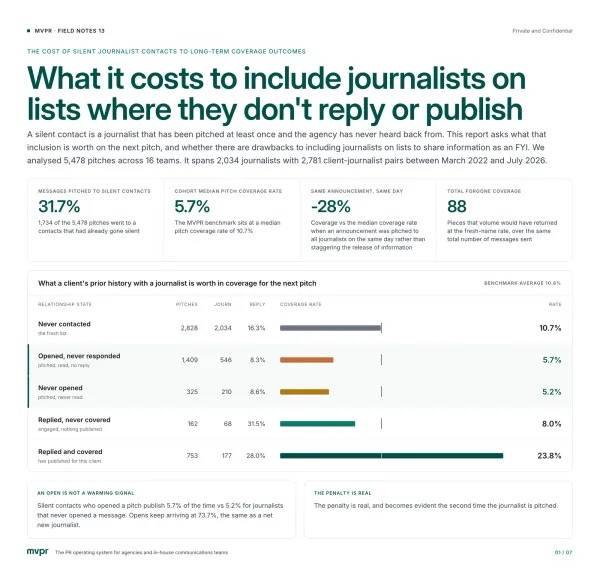
How to build media lists that get more coverage
Analysis of 5,478 pitches reveals silent journalists produce coverage at half the rate of fresh contacts, costing brands 88 pieces of coverage across their.
Data & Research
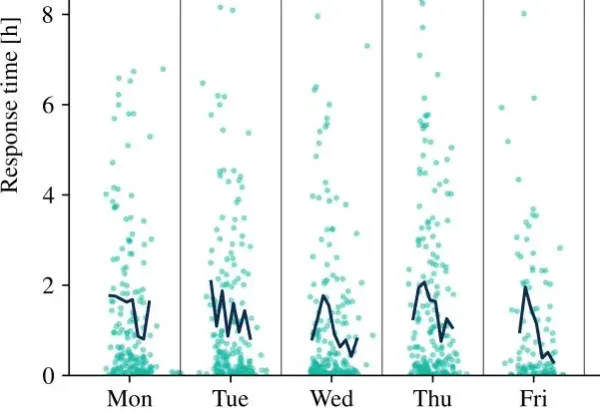
How long should I wait before pitching a new journalist?
MVPR data on pitching timing: how long to wait, when to follow up, and what journalist response patterns tell you about the right moment to try again.
Data & Research
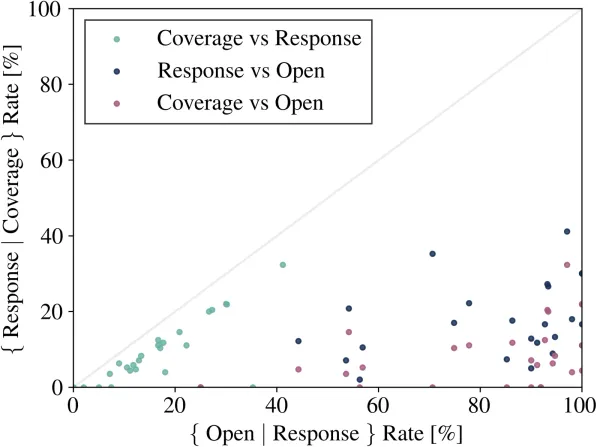
How to Build Media Lists That Guarantee Coverage
Response rate is the only media list metric that matters. MVPR data shows exactly what separates lists that earn coverage from lists that don’t.